
Innovative procurement to improve cycling safety
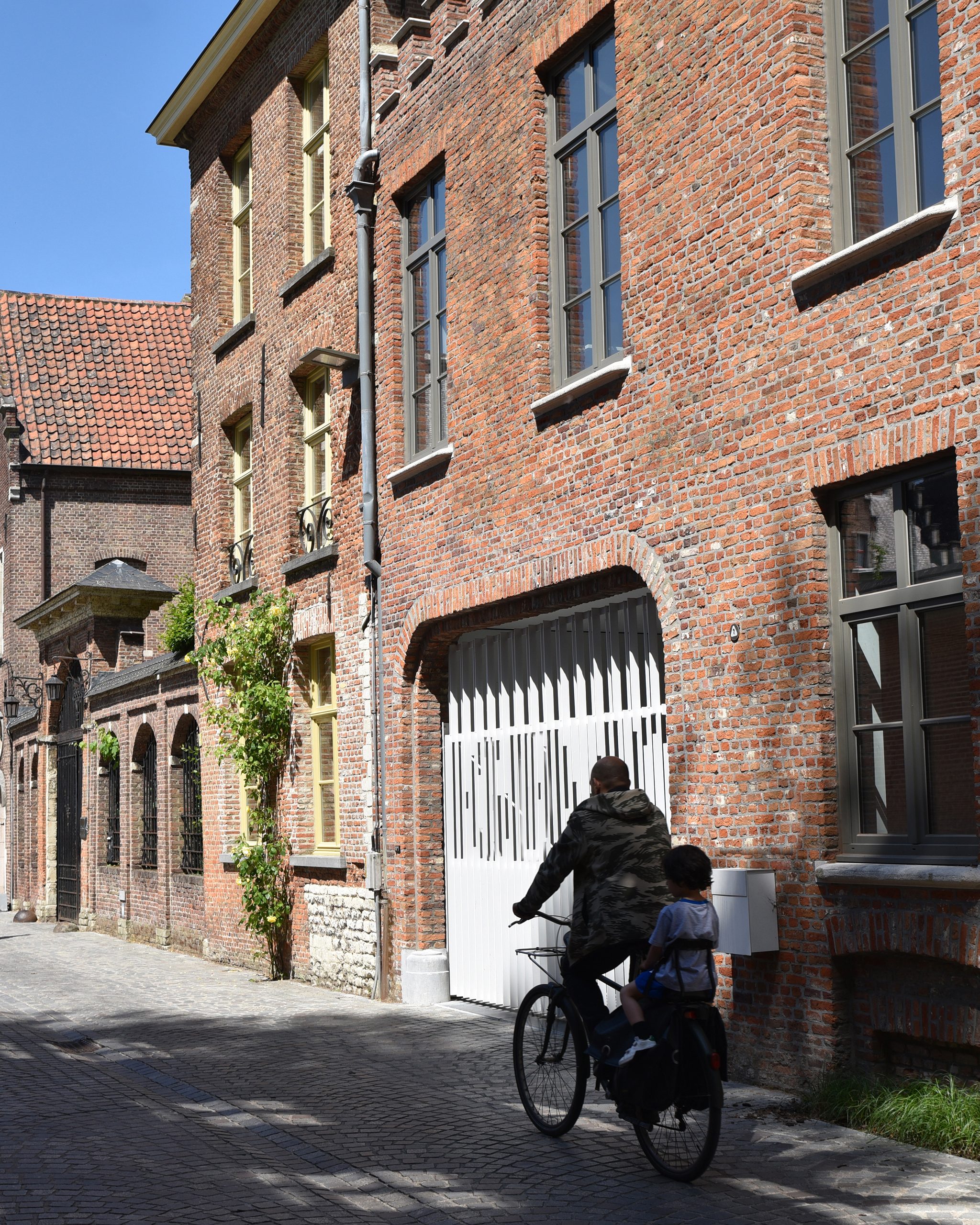
In 2024, the City of Mechelen explored a new way to improve cycling safety through the CitCom.ai project. Instead of buying a ready-made solution, the city launched an innovative procurement process that allowed multiple companies to test emerging, data-driven ideas in a real urban setting—showing how procurement itself can drive learning and innovation.
In 2024, the City of Mechelen launched an open call within the Citcom.ai project to explore new ways to improve cycling safety using data and technology.
The goal was not to buy a finished product, but to test innovative solutions that were not yet on the market, in a real urban environment, and learn which approaches best matched the city’s needs.
An open call – but also a public tender
Although we called it an “open call” to the outside world, the procedure was legally structured as a public tender (below €30,000).
What made it innovative was the funding model:
instead of awarding the full budget to one party, Mechelen distributed the budget across three selected proposals, based on their evaluation score.
- €12,000 for the highest-ranked proposal
- €10,000 for the second
- €8,000 for the third
This approach is perfectly allowed under Belgian procurement rules, but still largely unknown among local authorities.
Why split the budget?
The amounts were modest, but the incentive was powerful.
- Solution providers could test new ideas in a real city
- They received financial support without carrying all the risk
- The city could compare different approaches side by side
- Learning value increased – without committing to one solution too early
This internal competition created exactly what the open call aimed for:
experimentation, learning and innovation, rather than a one-off purchase.
Who participated?
Three companies were selected to test their solutions in Mechelen:
- XenomatiX – advanced sensing technologies
- Sentigrate – data-driven mobility insights
- Telraam – citizen-powered traffic data collection
Each solution was tested in the same urban context, allowing the city to better understand strengths, limitations and applicability.
– At this stage of product innovation, partnerships and connections matter more than remuneration. It is equally valuable to see how the other two companies who applied for the open call approached cycling safety, and to learn from their findings, says Thomas De Moor, Sentigrate.
What did the city gain?
For Mechelen, the open call delivered multiple benefits:
- A validated cycling safety use case within Citcom.ai
- Hands-on experience with innovative procurement methods
- Better insight into which solutions match real urban needs
- Lower risk, higher learning value
Most importantly, it showed that public procurement can actively stimulate innovation, even with limited budgets.
A model worth sharing
This approach offers a replicable model for other cities that want to:
- stimulate innovation without vendor lock-in
- explore multiple solutions in parallel
- stay within standard procurement thresholds
Sometimes, innovation is not only about technology, but about how you organise collaboration.
Roos Lowette


Co-funded by the European Union. Views and opinions expressed are however those of the author(s) only and do not necessarily reflect those of the European Union. Neither the European Union nor the granting authority can be held responsible for them.
- Address
- CitCom.ai TEF
Imec
Kapeldreef 75
3001 Leuven
Belgium
- Phone
- +32 1628 1211 (Imec)